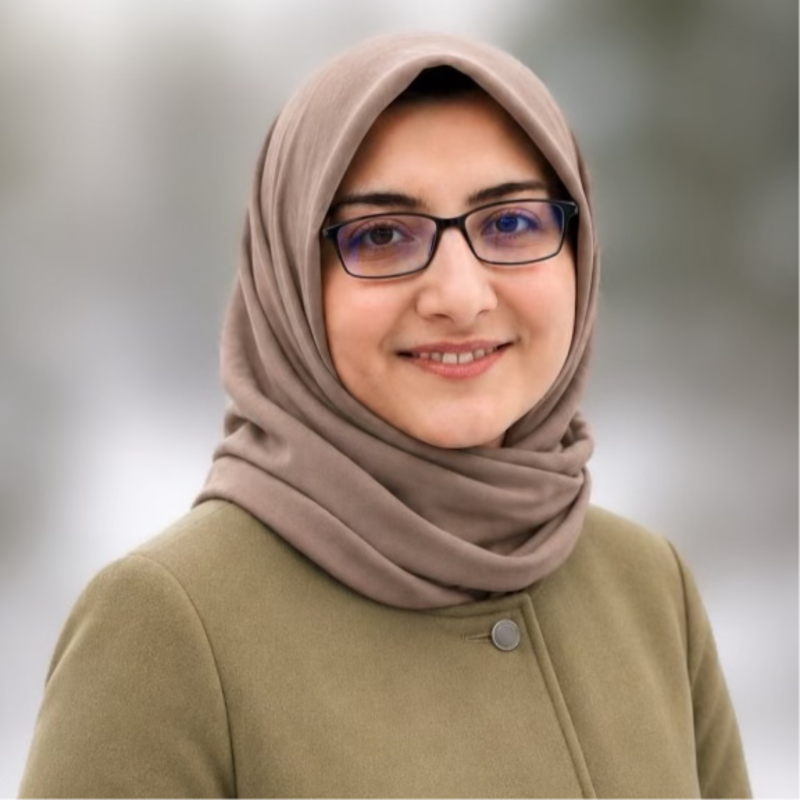
I am a Ph.D. candidate in the Department of Computer Science at the University of Toronto, supervised by Dr. Ishtiaque Ahmed at the Thirdspace Lab. My research sits at the intersection of Artificial Intelligence, Human-Computer Interaction, and society. Specifically, I study how digital and AI infrastructures shape the nonprofit, care-based and community-based activities of immigrant communities, especially groups that operate at the margins of formal systems.
My current work focuses on immigrant-led nonprofits and informal charitable organizations, examining how emerging AI systems can both support and further marginalize these communities. I study how nonprofit technologies, data infrastructures, and donor-facing platforms often privilege formal, well-resourced organizations while making informal or politically complex immigrant-led groups less visible and less supported. This work has led to the design of AMINA, an inclusive and accountable AI assistant for marginalized immigrant nonprofit assistance, developed through interviews, co-design sessions, and prototype evaluation.
More broadly, I am interested in technology, inequality, care, and community infrastructure. Across my projects, I use qualitative, participatory, and design-oriented methods, as well as quantitative techniques to understand how technology might strengthen, rather than replace or distort, these community-based practices. Please visit the Projects section for a list of my current and previous projects.
Before joining the Thirdspace Lab, I was working in the Rotman Research Institute under the supervision of Dr. Stephen Strother and Dr. Stephen Arnott. I developed a converter pipeline for the data management system of the Ontario Brain Institute which converted their extensive MRI imaging database to the new globally defined Brain Imaging Data Structure (BIDS). I was also a member of the data curation team, helping in the development and application of multivariate statistical tools for outlier detection of complex data.
I received my master's in Biomedical Engineering from the University of Toronto under the supervision of Dr. Tom Chau. My study focused on investigating the short-term effect of meditation on the oscillations of brain EEG signals, where I gained knowledge about machine learning, statistics, and health-related programming skills. Specifically, I evaluated how meditation and mental rehearsal affect the classification accuracy of brain-computer interface (BCI) devices. I received my BS in Electrical Engineering from the University of Tehran, Iran. During my undergraduate years, I had the chance to do a research internship and design a cough detection module to be embedded in a dysphagia detection algorithm.
I enjoy meditation, reading books, and being in nature in my spare time. I also like astronomy and night sky observation.